
Redesigning FC Barcelona's eTicket System After a 30,000-Fan Incident
After more than 30,000 away fans entered Camp Nou, we helped FC Barcelona introduce a new digital ticketing system designed to strengthen security and modernize member access.
- Client
- FC Barcelona & Hi Experience (Design Agency)
- Role
- Product Designer
- Focus
- Digital Adoption · UX Design · Communication
- Industry
- Sports
- Product
- App
Context
In 2022, FC Barcelona faced one of the club's most publicized operational challenges when more than 30,000 away supporters entered Camp Nou during a European match. The incident exposed weaknesses in the existing ticketing system and accelerated the need for a more secure way of managing member access.
To address the issue, the club launched a new mobile application that replaced the traditional physical membership card with secure digital tickets.
While the technology itself solved the security problem, the success of the initiative depended on something equally important: convincing more than 140,000 club members to adopt the new app before physical cards became invalid.
The challenge
Introducing a new application wasn't the difficult part. The real challenge was adoption.
For years, members had relied on their physical membership cards to access matches. Now they were being asked to download a completely new application, understand why the change was happening, and complete the migration before physical cards stopped working.
If a significant number of members failed to transition in time, matchdays could quickly become chaotic. Long queues, blocked access, and confused members would not only damage the experience but also undermine the success of the entire initiative.
The experience therefore needed to accomplish three things:
- — Clearly explain why the change was happening.
- — Encourage members to complete the migration before the deadline.
- — Make the transition feel simple and trustworthy.
The solution
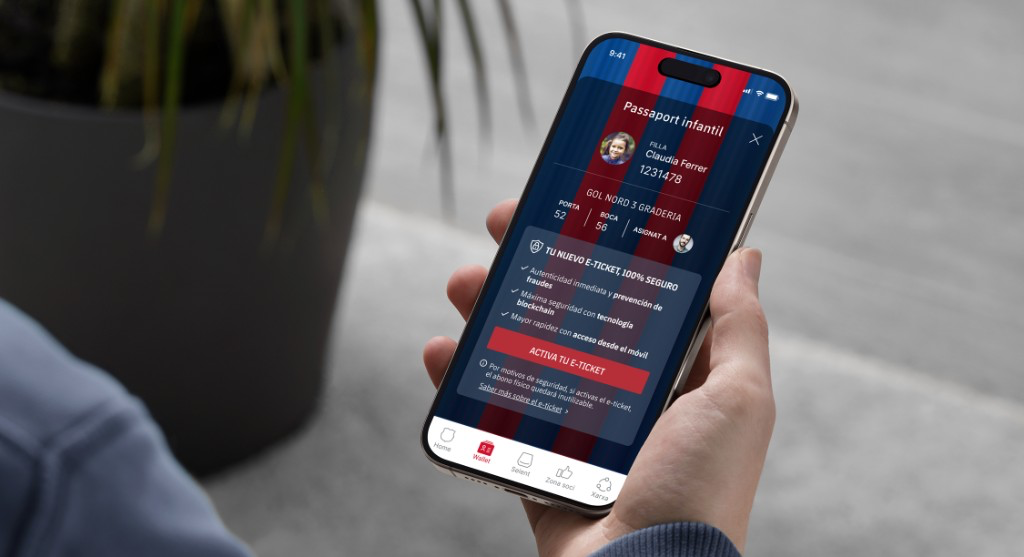
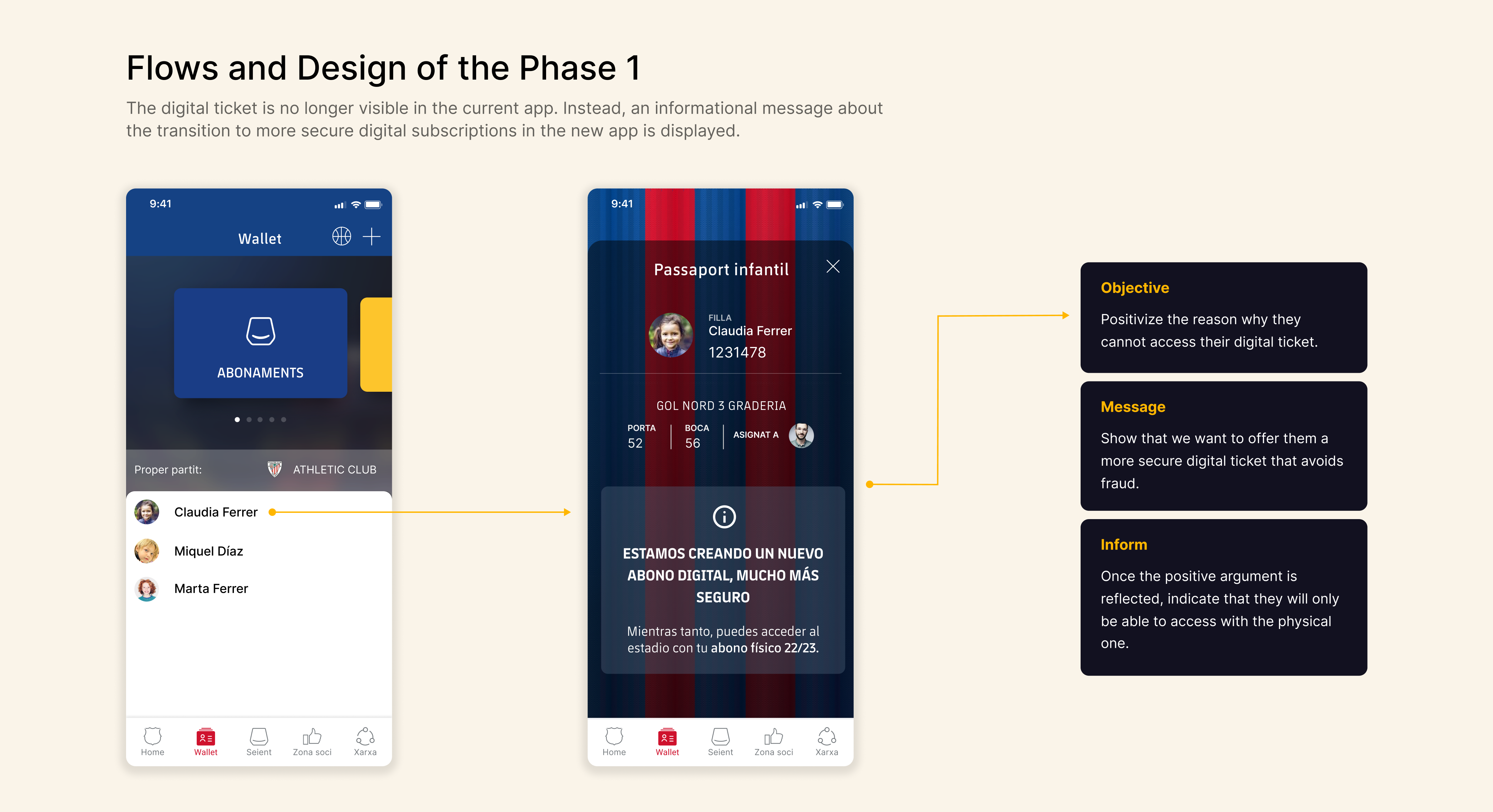
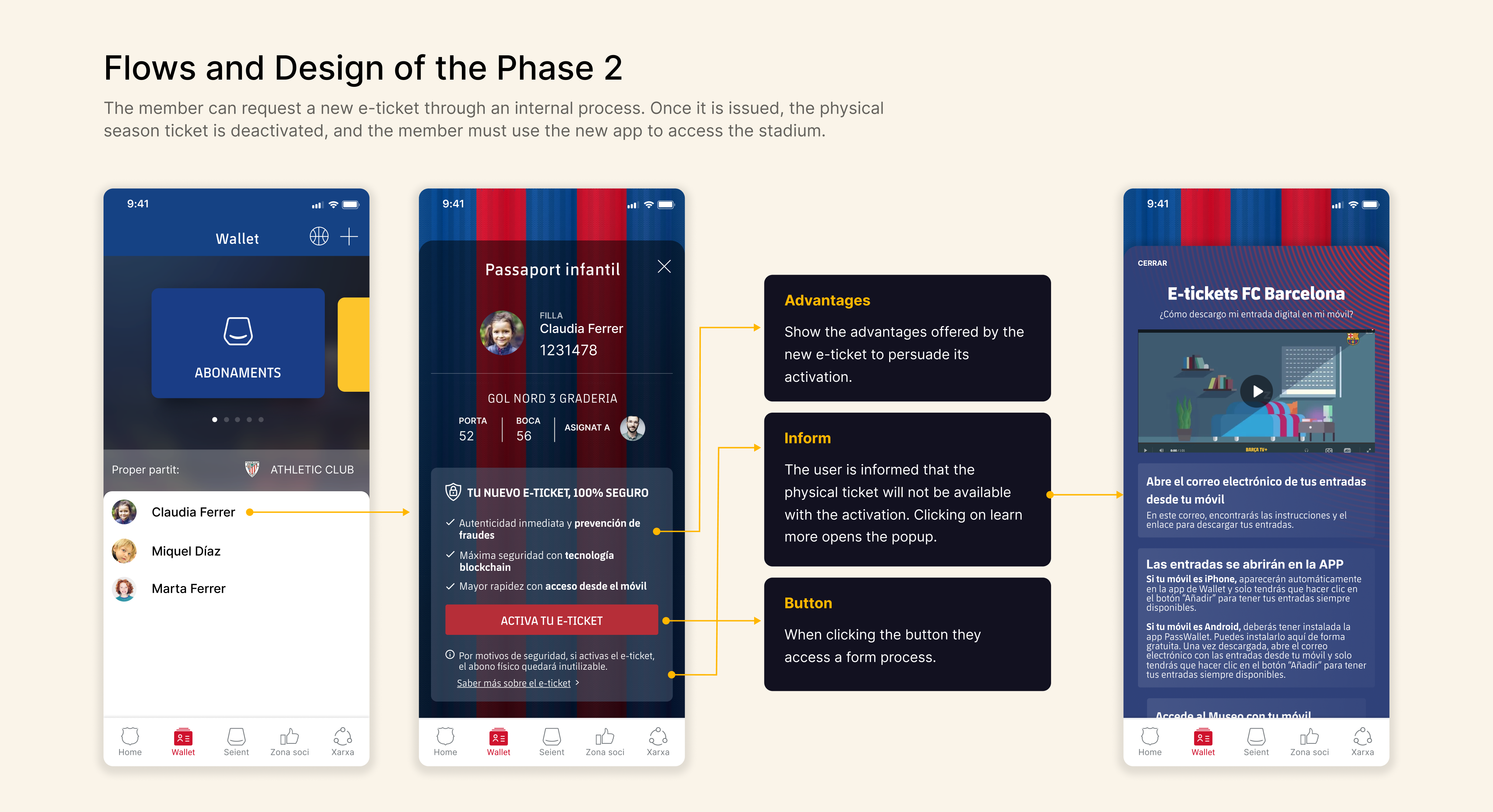
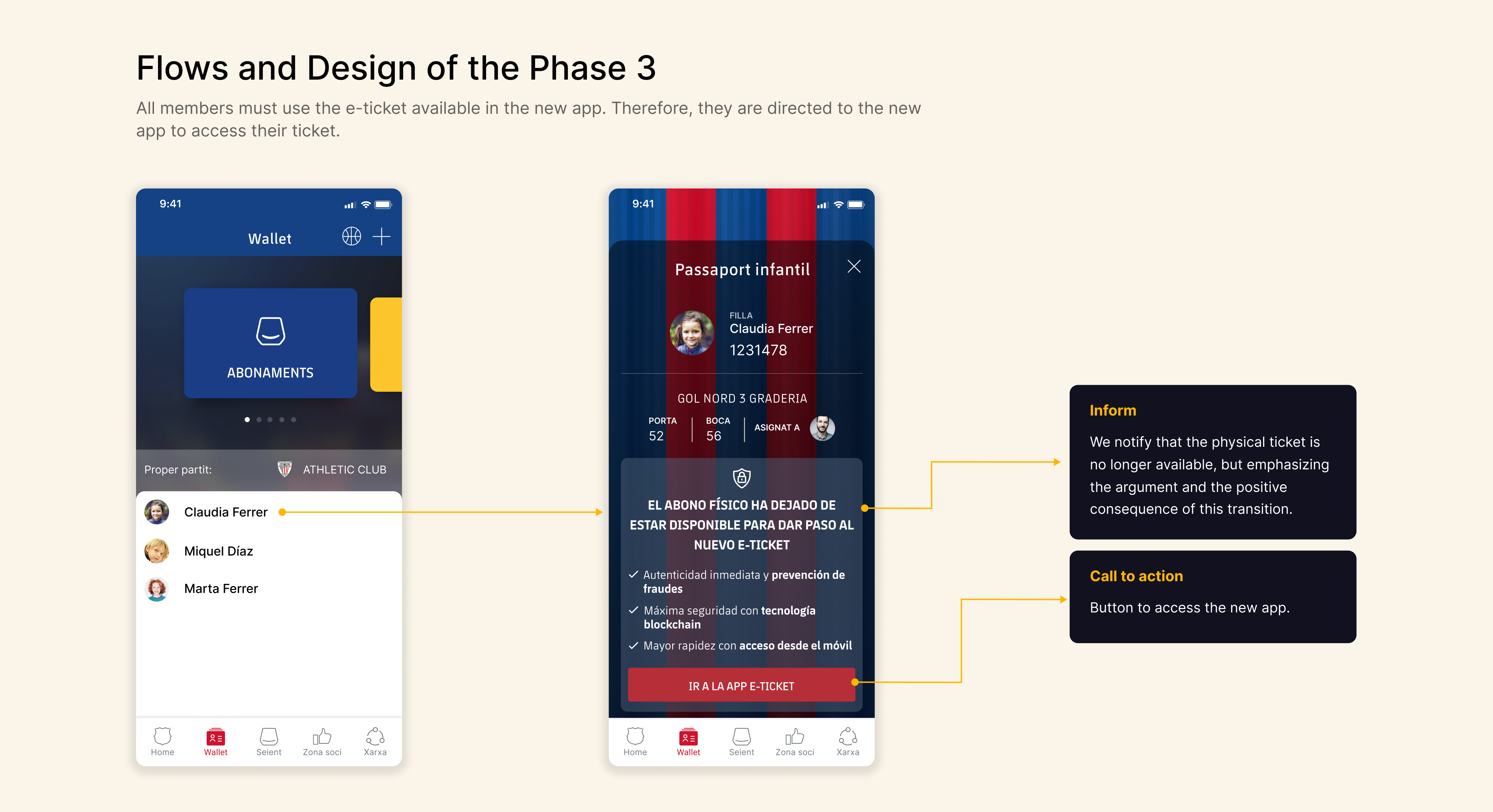
Rather than treating the migration as a single announcement, we designed the experience as a progressive transition that accompanied members throughout the entire rollout. Each stage had a specific objective—from building awareness and trust, to driving activation, and finally preparing members for the move to digital-only access.
Outcome
The experience launched as part of FC Barcelona's transition to a new secure digital ticketing platform, supporting one of the club's largest member-facing digital initiatives.
The rollout was designed for a membership base of more than 140,000 members, helping communicate the transition to the new app and preparing users for mandatory digital ticket adoption. Contributing to a product at this scale reinforced the importance of designing experiences that are clear, trustworthy, and easy to adopt.
Key learnings
This project taught me that successful digital transformations are driven as much by communication as by technology. When asking thousands of users to change a familiar behavior, reducing uncertainty becomes a core design challenge. It reinforced the importance of designing for adoption, anticipating user concerns, and using the product experience itself to build confidence before asking users to take action.